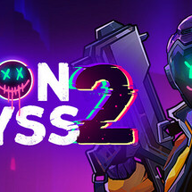
Who is the final boss in Neon Abyss 2 version 1.0?
Theia, Goddess of Vanity, is presented as a version 1.0 final Titan. Exact route prerequisites and numbered phases remain Unverified here.

Neon Abyss 2 boss guide for Titans, Theia, phase tells, movement space, build checks, co-op positioning, and safer route picks. Verified October 2026.
~10 min read
This Neon Abyss 2 boss guide separates confirmed version 1.0 identities from tactics you still need to read in the arena. The roster is described through Titans, Old Gods, and Managers. Theia, Goddess of Vanity, is a version 1.0 final Titan, and the 1.0 all-boss showcase also identifies a hidden fishing-room boss. Exact phase counts, health values, damage values, and route prerequisites are Unverified unless the live game displays them. Verified October 10, 2026.
The safest universal plan is simple: spend the opening pattern learning, protect one escape lane, attack only through a repeatable window, and treat any arena or animation change as a fresh observation problem. A fast clear is useful only after the tell is readable.
| Fact | Version 1.0 status |
|---|---|
| Boss groups | Titans, Old Gods, and Managers |
| Final Titan | Theia, Goddess of Vanity |
| Named gods | Aphrodite, Dark Aphrodite, Zeus, Dark Zeus, Athena, Hermes, Apollo, Michel, and Lisa |
| Secret encounter | A hidden fishing-room boss appears in version 1.0 all-boss coverage |
| Boss count in one full-release run menu | Ten different bosses are stated in captioned full-release footage; roster context may depend on progression |
| Exact phase counts | Unverified—do not infer a numbered phase from a health break or arena change |
| Recommended evidence | Use the live health bar, arena, animation, and post-fight progression screen |
Use Titans, Old Gods, and Managers as encounter families, not as a guaranteed route order. Version history matters: a Manager shown in Early Access footage can remain useful for learning its animations, but old health, damage, progression, and reward claims may no longer describe version 1.0. The table below records names without inventing a phase script.

| Entity | Known label or context | What remains Unverified |
|---|---|---|
| Theia | Goddess of Vanity; version 1.0 final Titan | Exact phases, unlock path, health, damage, and reward |
| Aphrodite | Named god encounter | Current route order and exact pattern sequence |
| Dark Aphrodite | Named dark god encounter | Relationship to standard Aphrodite progression |
| Zeus | Named god encounter | Current route order and exact pattern sequence |
| Dark Zeus | Named dark god encounter | Unlock condition and current numerical tuning |
| Athena | Named god encounter | Current route order and exact pattern sequence |
| Hermes | Named god encounter | Current route order and exact pattern sequence |
| Apollo | Named god encounter | Current route order and exact pattern sequence |
| Michel | God of Graffiti | Current route order, phase count, and rewards |
| Lisa | God of Galleries | Current route order, phase count, and rewards |
| Fishing-room boss | Hidden version 1.0 encounter | Trigger, repeatability, reward, and progression requirement |
A family name helps organize the roster, but it does not solve the fight. When you meet any listed boss, record the attack's origin, travel path, safe side, and recovery time. Those observations survive balance changes better than a copied damage value.
The hidden fishing-room boss is confirmed by the version 1.0 all-boss presentation, but its exact trigger is not verified here. Do not spend an entire run following an old ritual or assuming every fishing room must produce it. Capture the room prompt and trigger state before publishing a deterministic route.
Theia is the Goddess of Vanity and a final Titan introduced for version 1.0. “Final” describes her endgame status; it does not prove that every player reaches her through one fixed route, or that every visible transition is a numbered phase. Learn Theia from observable state changes instead of memorizing an unsupported script.
A useful note says, “after the arena changes, return to the center lane until the next origin is visible.” A brittle note says, “phase three always starts at this percentage” when neither the interface nor verified footage confirms that number. Anchor the response to what the player can actually see.
Final encounters punish panic more than low theoretical damage. If your attack fills the screen, stop firing briefly when a new cue begins. Seeing the safe route once creates repeatable uptime; obscuring it for one extra volley can end the attempt.
The best Neon Abyss 2 boss tells produce the same response even when a balance patch changes health or damage. Teach a cue-response pair. Start with position and silhouette, then add projectile behavior or arena state only when players can see it consistently.
| Visible cue | Safe first response | What to verify next |
|---|---|---|
| Boss moves to an edge or fixed point | Open distance and keep the opposite lane available | Whether the attack crosses, sweeps, or summons |
| Long wind-up or held pose | Stop committing to a long attack and watch the origin | Release timing and recovery window |
| Projectiles spawn away from the boss | Track the spawn point instead of staring at the boss | Whether gaps remain fixed or move |
| Adds or objects enter the arena | Protect movement space before focusing damage | Whether they persist, explode, or gate progression |
| Arena colors, platforms, or boundaries change | Reset assumptions and survive one cycle | Whether this is cosmetic, hazardous, or a new state |
| Boss pauses after a major pattern | Use a short proven attack window | How much recovery is safe with your weapon |
“Edge move—hold center” teaches more than “go left.” The first call tells the party what generated the decision, so they can adapt if their own position makes left unsafe. Direction-only calls create followers who fail as soon as the formation changes.
A player who can recognize one recovery window can finish slowly. A player carrying six guessed phase rules cannot diagnose why the seventh pattern killed them. Add tells only after reproducing them in another attempt or in clearly identified footage.
A boss-ready build needs usable damage, survivability, and a range that preserves observation. It does not need every rare item. Judge the build by whether it can continue dealing damage through the safe windows you have learned.
| Build check | Ready enough | Warning sign |
|---|---|---|
| Damage loop | A repeatable trigger works without taking contact damage | Damage depends on a rare condition you cannot activate |
| Range | You can hit while retaining an escape lane | Every attack forces you into an unreadable position |
| Survival | A mistake does not immediately end the attempt | You traded all recovery for speculative damage |
| Visual clarity | You can still see enemy cues while attacking | Your own effects hide the boss or projectile origin |
| Boss coverage | The build can hit close, distant, or airborne targets often enough | One target position shuts the build down completely |
| Co-op fit | Players occupy different lanes and cover weak ranges | Everyone chases the same spot and drags effects together |
A last-minute rarity upgrade can remove familiar range, affixes, or Weapon XP value. Keep the weapon if its real room performance is stable and the replacement has not proved a stronger loop. Use the full keep-or-sell process before spending the final preparation resources.
Large effects can raise damage while lowering your ability to see a tell. If the boss is unfamiliar, favor a controllable firing cadence. You can hold fire during a transition, read the next threat, and resume without dismantling the build.
Take the boss route when the current build can express its main damage loop, survive one mistake, and reach the target positions the run has already shown. Explore more when a known branch can repair a specific weakness. “Maybe there is something better” is not enough reason to risk all remaining health or access resources.
| Run state | Route pick | Reason |
|---|---|---|
| Reliable damage, safe range, recovery available | Take the boss | The build already meets the practical win condition |
| Damage works but health is critically low | Seek a known recovery option | A single learning mistake could erase the attempt |
| Strong room clear but poor distant coverage | Seek targeted coverage if a branch remains | Boss positioning may deny the current loop |
| Unknown branch costs the final key, bomb, or health | Usually preserve the resource | The speculative reward may not solve the boss |
| You are practicing one named tell | Take the boss earlier | More attempts create more learning than perfect routing |
| Hidden fishing boss is the goal | Document the fishing-room state | The exact trigger remains Unverified |
A clear attempt and a research attempt spend resources differently. A clear attempt repairs weaknesses. A research attempt reaches the target quickly and records one tell. Mixing both goals often produces a long route followed by the same unread mistake.
Old guides can show where an encounter once appeared without proving the current requirement. Record version 1.0, difficulty, mode, and any visible prerequisite whenever you document Theia or a hidden encounter.
A co-op boss party should create readable lanes, not surround the target automatically. One player calls the visible cue; each player remains responsible for a safe local response. Extra players add damage, Hatchmon, and effects, but they also add visual noise and conflicting dodges.
If a player falls or loses position, first preserve the remaining safe lane. Rushing through an active pattern can turn one mistake into a wipe. Exact revive behavior is version- and mode-sensitive, so verify the live prompt before building strategy around it.
Run a three-step drill: observe, name, punish. Observe one full opening without greed. Name the cue and the safe lane in a short sentence. Punish only the recovery you can repeat. If the attempt fails, change one response—not the whole build, route, and position at once.
| Attempt | Single objective | Success measure |
|---|---|---|
| 1. Observe | Survive the opening while watching origins and boundaries | You can describe one cue without guessing |
| 2. Name | Say the cue and response before it resolves | The call predicts a safe lane |
| 3. Punish | Use one short attack during the known recovery | Damage lands without sacrificing the lane |
| 4. Repeat | Reproduce the same response | The tell works from more than one starting position |
| 5. Extend | Add one new cue | The original response remains stable |
The faster Storm Breach mode emphasizes combat, upgrades, and forward momentum, making it a useful place to practice quick build reads once you can already observe a boss without panicking. Bring co-op roles if the extra visual load is the problem you want to train.
Matched by build plan, shared topics, and guide progression — not random related links.
Theia, Goddess of Vanity, is presented as a version 1.0 final Titan. Exact route prerequisites and numbered phases remain Unverified here.
Captioned full-release footage states there are ten different bosses in its progression context. Do not turn that statement into a universal completion count without checking unlocks, hidden encounters, and the current version.
Yes, version 1.0 all-boss coverage identifies a hidden fishing-room boss. Its exact trigger, repeatability, and rewards remain Unverified.
Unverified. Count only phases explicitly labeled by the game or supported by verified evidence; a health break, animation, or arena transition alone does not prove a numbered phase.
They are separately named encounters. Their exact version 1.0 relationship, route conditions, and pattern overlap should be verified in the live game.
Named encounters include Aphrodite, Dark Aphrodite, Zeus, Dark Zeus, Athena, Hermes, Apollo, Michel God of Graffiti, and Lisa God of Galleries.
Try Storm Breach once the observe-name-punish loop clicks, or organize readable lanes with the co-op guide.
Matched by build plan, shared topics, and guide progression — not random related links.